What each part of the prompt does
- Rows spelled out
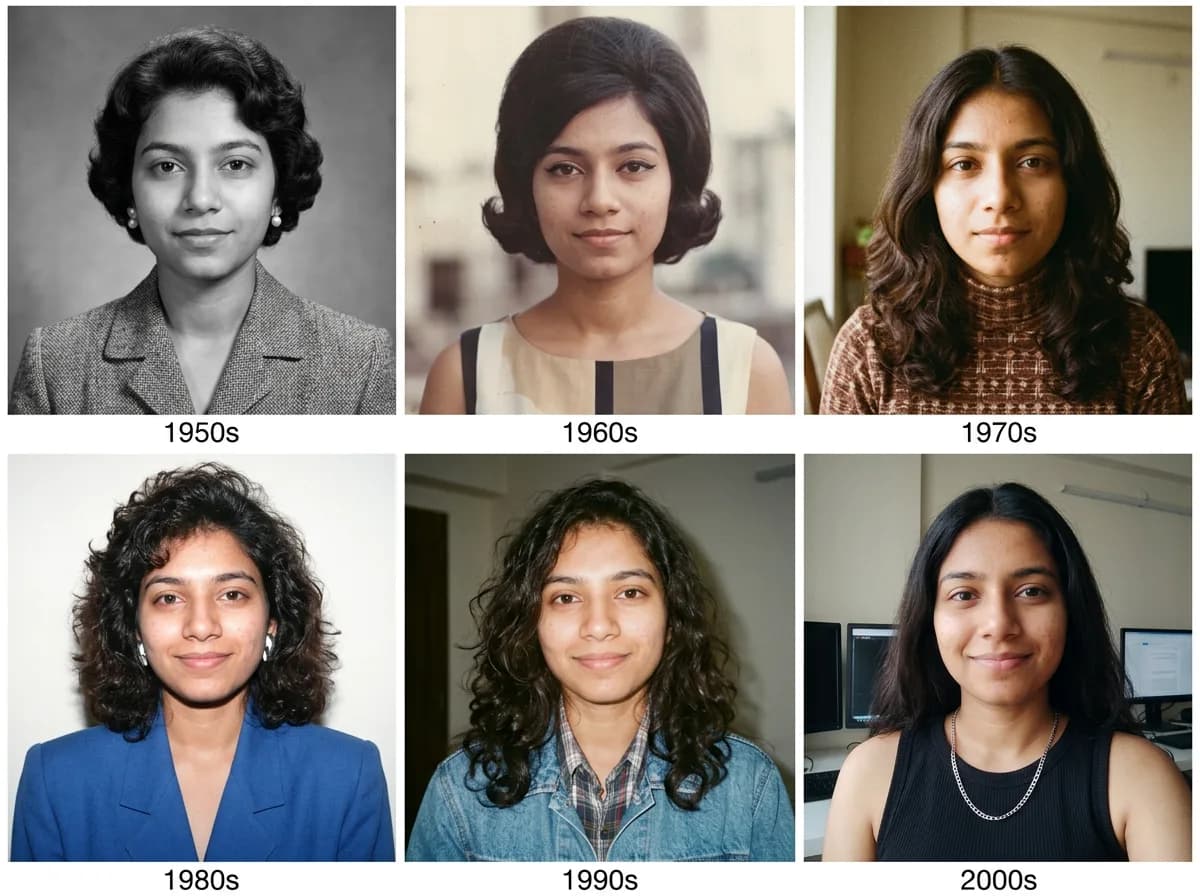
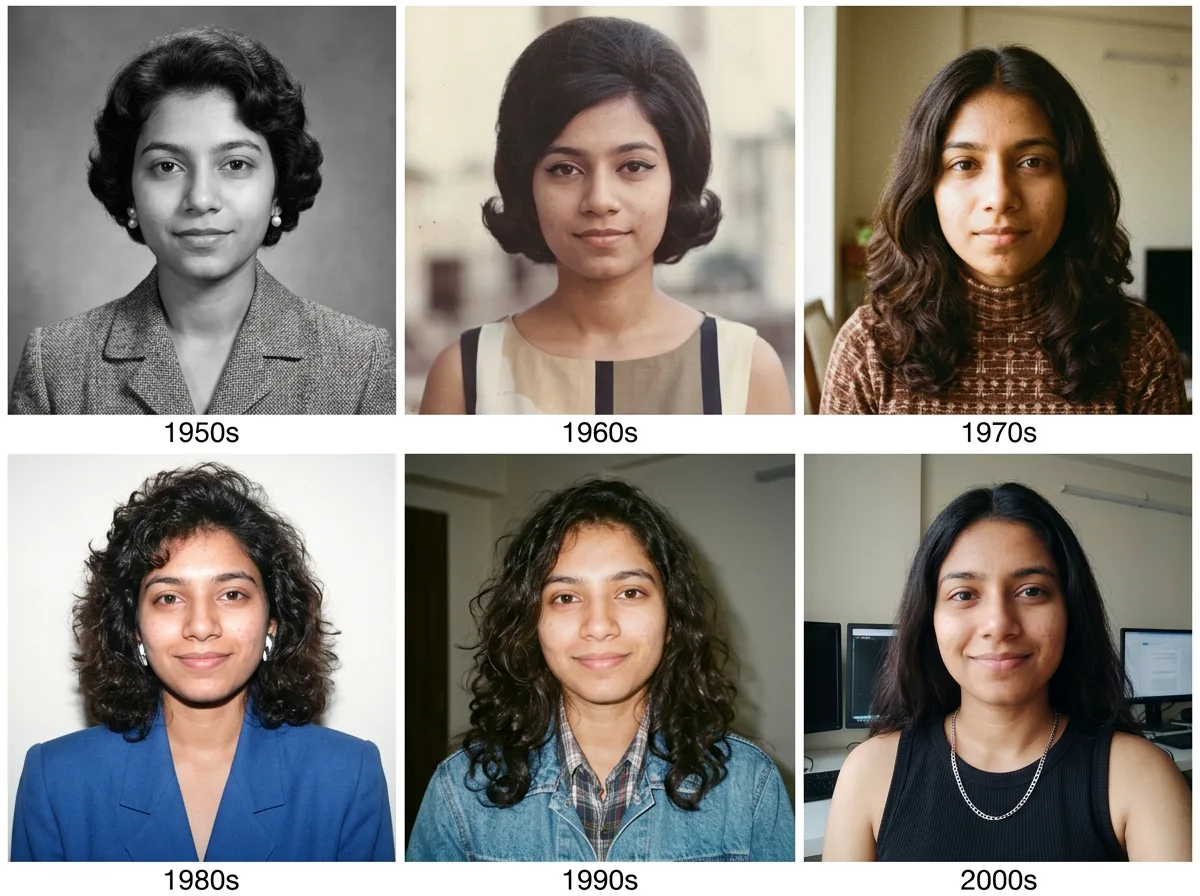
- "3 columns and 2 rows" alone is easy to misread, so the prompt also names the decades in each row from left to right. A model that knows exactly which tile holds the 1980s cannot swap the layout or repeat an era.
- Era looks kept apart from labels
- The photo styles (studio print, faded colour, grainy film, flash, disposable, early digital) sit in their own sentence, away from the label rule. When style words and labels share a sentence, image models tend to print the style words as part of the caption.
- The face stays
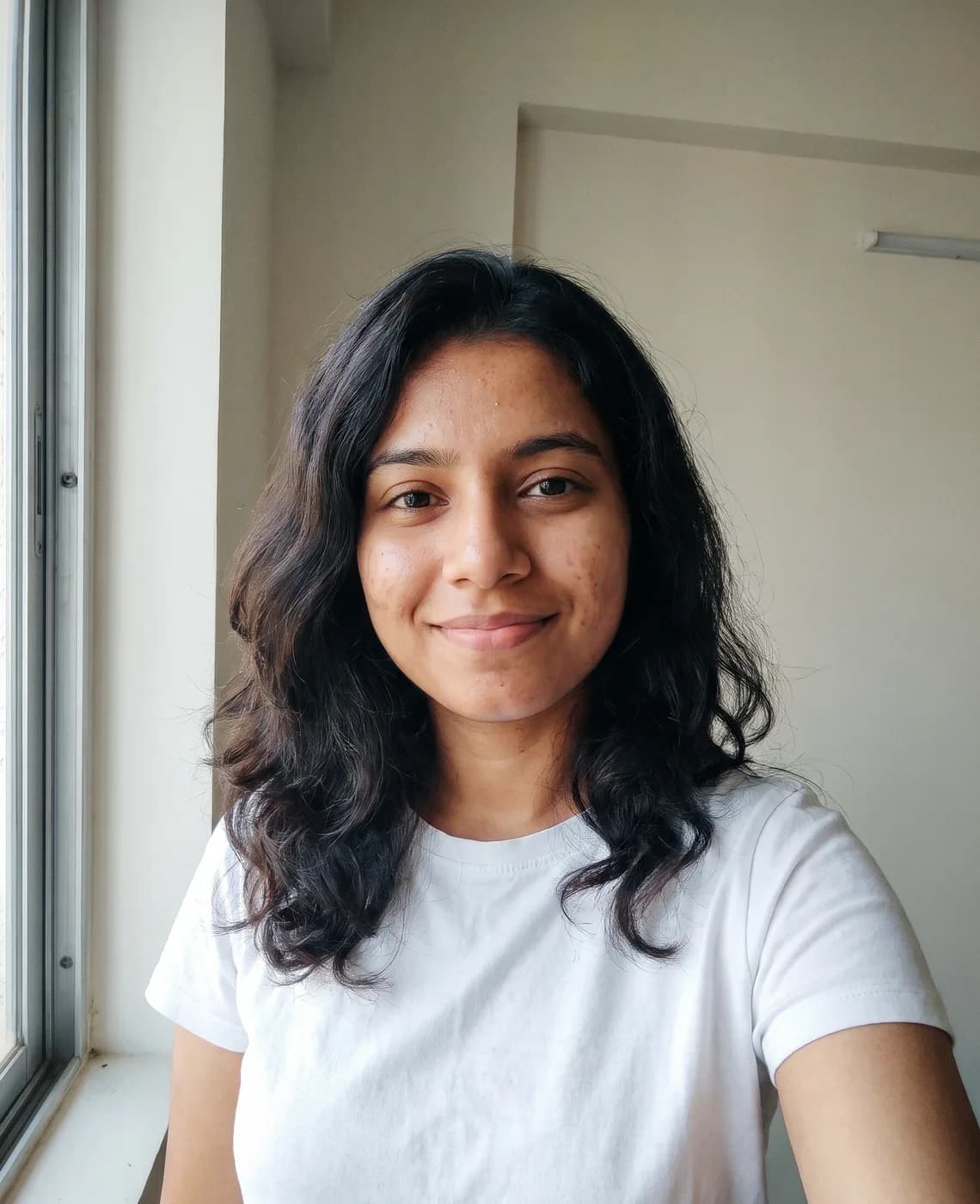
- Face, features, skin tone, age and expression are locked for all six tiles. Naming age matters here, because without it the model often makes the 1950s tile older and the 2000s tile younger.
- Labels as the only text
- The text rule lists the six labels word for word and then forbids everything else. A slogan printed on a shirt counts as text too, and models like to add one to 1990s and 2000s outfits, so plain clothing is asked for outright.
Variations to try
Same idea, one thing changed. These have no example image yet.
Older decades Make one image: a grid of six equal portraits of the person in my uploaded photo, laid out as 3 columns and 2 rows with thin white gaps between the tiles. Top row, left to right: 1900s, 1920s, 1930s. Bottom row, left to right: 1940s, 1950s, 1960s. Each tile shows the same person as if photographed in that decade, with the hairstyle, clothes, makeup and background of the time and the look of a photo from then: a sepia cabinet card for the 1900s, soft-focus black and white for the 1920s, a glossy studio portrait for the 1930s, high-contrast black and white for the 1940s, early hand-tinted colour for the 1950s and soft faded colour for the 1960s. Keep the face, features, skin tone, age and expression identical in all six tiles. Text: the only words in the whole image are six small labels in plain sans-serif, one centred under each tile, reading exactly 1900s, 1920s, 1930s, 1940s, 1950s and 1960s. Nothing else is written anywhere: no captions, no style names, no logos, and plain clothing with no lettering or prints of words. Landscape 4:3 image.
One decade, full photo Restyle the person in my uploaded photo as if photographed in the 1970s: long feathered hair, a wide-collar patterned shirt, a sunny California beach road behind them, shot on warm, grainy 35mm film with slightly faded colour. Keep the face, features, skin tone and expression identical. Portrait 4:5 frame.
Future decades Make one image: a grid of six equal portraits of the person in my uploaded photo, laid out as 3 columns and 2 rows with thin white gaps between the tiles. Top row, left to right: 2010s, 2020s, 2040s. Bottom row, left to right: 2060s, 2080s, 2100s. Each tile shows the same person as if photographed in that decade, with the hairstyle, clothes, makeup and background of the time and the look of a photo from then: a filtered phone photo for the 2010s, a clean modern portrait for the 2020s, minimal futuristic clothing for the 2040s, a sleek neon-lit city for the 2060s, a soft holographic studio for the 2080s and a calm space station for the 2100s. Keep the face, features, skin tone, age and expression identical in all six tiles. Text: the only words in the whole image are six small labels in plain sans-serif, one centred under each tile, reading exactly 2010s, 2020s, 2040s, 2060s, 2080s and 2100s. Nothing else is written anywhere: no captions, no style names, no logos, and plain clothing with no lettering or prints of words. Landscape 4:3 image.
If the result isn't right
- If a label picks up extra words, reply with only the fix: "relabel the tiles with just the decade, for example 1980s, nothing else".
- If the grid comes back as 2 columns and 3 rows, repeat the row line on its own: "top row 1950s, 1960s, 1970s; bottom row 1980s, 1990s, 2000s".
- Gemini may age the face along with the decade; add "same age as in my photo in every tile" if one tile drifts.
- For a man's photo the same prompt works; the decade styling follows the person in the photo.